Sunday, 15 June 2025

Journeys


The Silk Road


 Dear Reader, 

The Silk Road was a network of trade routes that connected East and West, primarily from the Han Dynasty in China to the 15th century, facilitating economic, cultural and political exchange.  

The routes were not a single road but a complex web of land and sea routes, the term "Silk Road" was coined in the 19th century.

The Silk Road traded in goods like silk, spices and other luxury items, as well as the exchange of ideas, religions and even diseases.  Buddhism spread westward along the routes.  The Silk Road was the longest ancient overland trade route and its total length was about 9000 kilometers.

Marco Polo is arguably the most famous western traveler to have journeyed on the Silk Road.  As a young merchant, he began his journey to China in 1271 and his travels lasted for 24 years.

During the centuries the Silk Road existed, bandits were an ever present threat that merchants had to worry about.  Bandits could attack and rob a caravan at any time during the long journey from China to Europe, spelling disaster for the merchants.


                                                                                 *

 From S.T. Coleridge   June 18th  1801 in Westmorland

'A hollow place in the rock like a coffin - a sycamore bush at the head, enough to give a shadow for my face, and just at the foot one tall foxglove - exactly my own length - there I lay and slept.  It was quite soft."


From James Woodforde   June 19th   1799 in Norfolk

'Very cold indeed again today, so cold that Mrs. Custance came walking in her spencer with a bosom-friend.'

Mrs. Custance, a a lady of fashion , would have worn her gowns low cut, in the bosomy manner so often drawn by Rowlandson: in cold weather she would have needed the fashionable item of clothing known as the 'bosom-friend'.


                                                                       *


Journeys


Young,
we fly to distant places,
walk the Silk Road,
swim in the Nile,
climb Kilimanjaro,
sail the great seas,
picnic in the desert
under the stars.


Middle aged, with children,
we travel to Europe,
walk in the hills,
ski, surf board, visit museums,
exclaim at the Eiffel Tower,
swim in rivers,
raid the High Streets.

Grandparents, and old now,

we travel all over the world,
enjoy lions in Africa,
natives dancing in Bali,
big white whales in vast oceans,
and explore National Parks

while drinking cups of tea,
preparing for the unknown

and longest journey.


                                                                                        *

With best wishes, Patricia
                     

Saturday, 7 June 2025

The Man from Middlesbrough


The Cleveland Hills and a Shipyard


Dear Reader,

Shipyards have a long history with evidence of early dockyards dating back to the Indus Valley civilization around 24,00 BC.  From these ancient beginnings shipyards evolved with shipbuilding technology playing a crucial role in maritime trade, warfare and exploration.  

The history of shipyards is also intertwined with the development of various shipbuilding materials including wood, iron, and steel as well as technological advancements like the steam engine and the introduction of dry docks.

Despite its ups and downs Sunderland had long been hailed as the largest shipbuilding town in the world.

The shipbuilding industry experienced a significant boom during World War 11 due to the increased demand for both naval and merchant ships, which were crucial for both the war effort and maintaining supply lines.   The demand spurred the mobilization of resources, including labour and industrial capacity leading to a rapid expansion of the industry.

While the industry has now declined, particularly in commercial shipbuilding, there are still active shipyards, including those involved in ship repairs and some new building projects.

                                                                             *

From Francis Kilvert    June 7th  1874 in Wiltshire

'Another glorious day of sunshine and unclouded blue.  But every day the drought grows drier and the predicted water famine is stealing upon us.  Every day the pasture grows whiter and more bare and slippery.....Later the warm soft night was laden with perfume and the sweet scent of the syringa.'


From Dorothy Wordsworth   June 9th  1802 in Westmorland

'A soaking all day rain.....The hawthorns on the mountains sides like orchards in blossom.'


                                                                                *
The Man from Middlesbrough
 
 
ordered another cup of tea,
lit another cigarette.
 
He held his head
in his history-stained hands,
nicotine fingers clutching
tufts of dirty grey hair.
He stared, not-seeing, at
the plastic tablecloth,
his mind numb.
 
His father, his grandfather,
worked in this shipyard
watched ships lovingly grow
from steel plates to proud traders,
built to sail from the Tees estuary,
into the North Sea
and the world’s great oceans.
 
In his head the man heard the noise,
music to him, of drag chains,
when a ship pushed along
the greasy slipway, slid into the sea.
And the man thought of his mates,
of shared experiences from school days,
first girlfriends, first kisses,
walks in the Cleveland hills.
And he thought of the old canteen,
warm with steam from the tea urn,
from brotherhood.
 
The man wiped his eyes
with the back of his hand,
 
ordered another cup of tea,
lit another cigarette.
 
                                                                                       *

With very best wishes, Patricia


My new collection of poetry has now been published.  You can obtain a copy from Amazon.  Put the name:   Patrica Huth Ellis into Amazon and click and you will get there.


Sunday, 1 June 2025

Camel


Saddlebags


Dear Reader


Nomadic saddlebags or Khorjins and heybes, have a rich history as essential tools for Nomadic tribes in the Middle East and Central Asia.

These double saddlebags were woven to carry a variety of goods, from personal belongings to supplies for the family's journey.  The bags were often woven by women on small portable looms, using materials like wool and goat's hair.  Various weaving techniques were employed including hand-knotted pile. plain weave (kilim) and soumac.  

Saddlebags were not just practical tools but also expressions of tribal identity and artistic skill, reflecting centuries-old weaving traditions.   The bags came in various sizes and styles, ranging from small pouches to larger handbags and saddlebags.  

Saddlebags were a common accessory used on horses in the 1800s particularly in rural and frontier areas. They were typically made of leather or canvas and designed to be hung over the horse's saddle to provide extra storage space for supplies and equipment.

                                                                                  *


From Thomas Hardy  June 2nd  1865 in London

'Walked about by moonlight in the evening.  Wondered what woman, if any, I should be thinking about in five years' time.'


From Gilbert White   June 5th   1782 in Hampshire

'My brother Thomas White nailed up several large scallop shells under the eaves of his house at South Lambert, to see if the house-martins would build in them.  These conveniences had not been fixed up half an hour before several pairs settled upon them; expressing great complacency, began to build immediately.'

                                                                                   *


Camel


The woman stares at me

into my rheumy eyes, my sad face

sees a dusty, dirty animal

mud sticking to my coat

my miserable tail hanging loose

my hooves cracked, hump matted.


But I want her to know

that this is not me.

I came from a land of warmth

of sun, of sand,

my Arab owner loved me

understood me

he spoke to me softly

he stoked my coat.

He rode on my back

Kelim rugs hugging my haunches

water in large panniers

strung to my side.

We rode to oases, to Petra Rose,

he was my friend

I weep for the want of him.


The woman walks away

but something glistens on her cheek.


                                                                              *


My book of poetry BETRAYAL has been published on Amazon.  If you would like a copy  just put:

Patricia Huth Ellis  into Amazon and there it will be.  It is to be my last book since the muse seems to have left me.


My partner Prof Alan Harrison is working on a large A I website at  https://www.alanfharrisonandai.com/

I know less than nothing about AI and found it very interesting; you might too.


                                                                              *


With very best wishes, as always, Patricia 

Sunday, 25 May 2025

Of Different Stuff


Spitfires


Dear Reader, 

The Supermarine Spitfire is a legendary British fighter aircraft, particularly renowned for its role in the Battle of Britain during WWII.   It was known for its peed, agility and powerful weaponry, becoming a symbol of Allied resilience.  Over 20,000 Spitfires were produced, undergoing significant design changes and improvements throughout the war.

The iconic Supermarine Spitfire was critical in defending Luftwaffe air attacks during the Battle of Britain.

The Spitfire, also commonly referred to as the Supermarine Spitfire, in undoubtedly one of the most iconic and beloved aircraft in the history of aviation.  It was the only Allied fighter to be in production for the duration of WWII. During the war Spitfires flew 835,00 sorties.  They were also capable of carrying two 250lb bombs, one on each wing or one 500lb bomb under the fuselage.

Brad Pitt is an accomplished pilot and, in addition to having mastered the more common and garden aircraft, he owns a World War II-era Supermarine Spitfire.


                                                                                  *

From D.H.Lawrence  May 24th  1916 in Cornwall

'The country is simply wonderful, blue, graceful little companies of bluebells everywhere on the moors, the gorse in flame, and on the cliffs and by the sea, a host of primrose, like settling butterflies, and seapinks like a hover of pink bees near the water.  There is a Spanish ship run on the rocks just below - great excitement everywhere.'

From Francis Kilvert   May 27th   1874  in Wiltshire

'.......banks and hedges brilliant with pink campion....As I came home the western heavens were jewelled with pure bright sparkling lights of grey silver and pale gold, and overhead a sublime mackerel sky of white and blue in its distant fleecy beauty gave me a more intense and grand sense of infinity and the illimitable than I ever remember to have had before.'


                                                                              *

Of Different Stuff


The ATS, the WAAFS, the WRENS,

rode in battleships,

flew spitfires and mosquitoes,

decoded enemy messages

nursed the wounded.


They tilled the land

drove tractors, fed the pigs,

birthed the lambs,

rose with the dawn,

went to bed late

exhausted and often hungry.


They walked alone in London

late at night

in the dark and dangerous streets,

they slept in freezing dormitories

shared a lavatory and basin

with twenty others.


These women were made

of different stuff.

They were fearless,

 they were brave.


                                          *


I am ashamed at my fearfulness

in the peace they fought for us,

gave us.

I am made, sadly, of different stuff.


                                                                          *

A new volume of my poetry 'Betrayal' has just been published.  If you would like a copy it is on Amazon under the name: Patricia Huth Ellis.   Click on that name and it will come up.  Some of the poems you will have already seen but there are lots of new ones.  It is my final book as the muse seems to have left me now, in old age.

                                                                          *


With very best wishes, Patricia


Sunday, 18 May 2025

A Curse


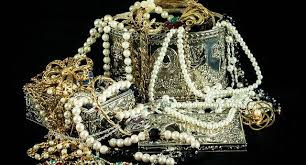
                                                                       Medieval jewellery


Dear reader,

I have never understood how people can violate sacred graves and dig up bones that were put there to rest for ever by loving relatives.

It seems sacrilege.   I think Shakespeare would agree with me as he wrote on his memorial stone:

                                    'Good friends for Jesus sake forbear
                                     To dig the dust enclosed here
                                     Blessed be the man that spares these stones
                                     And cursed be he that moves my bones.'

I think it should be a very private resting place and the bones left alone in peace.  Why do we need to know what was in the coffin?  I would say it was no-one else's business, not even the scientists and archeologists who apparently need to know for some best good reason known to themselves. 

This seems to be the age of knowing everything.  But some secret things are best left secret and I would like to think that when my bones are left to rest, with my bear Aristotle by my side, I will hear the wind and the rain in tranquillity and quiet for a thousand years.  My bones left in peace.

                                                                                   *

From Dorothy Wordsworth  May 20th  1800 in Westmorland

'A fine mild rain.  After breakfast the sky cleared and before the clouds passed from the hills I went to Ambleside.  It was a sweet morning.  Everything green and overflowing with life, and the streams making a perpetual song, with the thrushes and all little birds, not forgetting the stonechats.'


From Gerard Manley Hopkins  May 21st 1874 in Surrey

'A mockery of bright sunshine day after day, no rain..... wind always holding from the north, dim blue skies, faint clouds, ashy frosts in the mornings:  saw young icy leaves along the sunk fence bitten and blackened.'


                                                                     *

A Curse
 
 
on those who plunder the earth,
and violate sacred places......
 
A curse on those who disturb
and steal gently-bandaged skulls,
legs, arms, and finger-bones,
jewels: perhaps a pearl bracelet,
a coral ring, hair pins, or a mosiac plate,
set out lovingly with food
for the long journey home.
Who have lain there, at peace,
for many thousand years,
the sand, the desert winds, the rains,
nature’s bed.
 
 
A curse on those whose
laughter and excitement
fills the air, stealing these remains,
transporting them to people
in white coats,
who dissect their dignity,
stick labels on them,
give them to museums
to enlighten an ice-cream licking public.
 
                                                                       *
 
I have a new collection of my poetry out on Amazon.  Should you wish to purchase a copy you can do so here.  There are some new poems and some that you might have seen before.  It is my last collection before I leave this mortal coil and I do hope you will enjoy, at least, some of them.

                                                                       *

With very best wishes, Patricia


Sunday, 11 May 2025

Invocation to Iona


 Dear Reader,

Puffins, especially Atlantic puffins have a rich history marked by both decline and resurgence.  In the 19th century they were heavily hunted for feathers, eggs and meat leading to significant population drops in areas like Maine.  However, conservation efforts, like Project Puffin, have seen a revival of puffin populations in regions where they were once nearly extinct, demonstrating their resilience and the power of conservation.

In Iceland and Faroe Islands the birds have been hunted relatively sustainably for centuries.  But in North America in the 1800s and early 1900s populations declined and puffins disappeared entirely from the United States.

In Irish folklore puffins are reincarnations of Celtic monks and in the Faroe Islands they are known as prestur - priests.

Puffins are known for their curious nature and placid temperaments, often approaching humans without fear.  Puffins are highly intelligent birds.  Scientists have come to that conclusion as they have identified big-brain-behaviour in puffins which so far have only been discovered in primates and elephants.  For instance, the Atlantic puffin has been observed using sticks and twigs as a tool to scratch themselves.


                                                                        *

From Gerald Manley Hopkins   May 17th  1874  in Surrey

.... to Combe Wood to see and gather bluebells, which we did, but fell in bluehanded with a gamekeeper, which is a humbling thing to do.  Then we heard a nightingale utter few strains-strings of very liquid gurgles.


From Dorothy Wordsworth  May 20th  1800 in Westmorland

A fine mild rain.   After breakfast the sky cleared and before the clouds passed from the hills I went to Ambleside.    It was a sweet morning.   Everything green and overflowing with life, and the streams making a perpetual song, with the thrushes and all little birds, not forgetting the stone-chats.


                                                                        *

Invocation to Iona


“Iona, sacred island, mother,

I honour you,

who cradle the bones

of Scottish kings,

Who birthed coloured gemstones

to enchant bleached beaches,

who shelter puffins on your rocks.


I wrap myself in your history,

and knot the garment with

machair rope-grass.

In the Port of Coracle

your southern bay,

I hear the wind-blown cormorants cry

and draw a breath.

I see Columba’s footsteps

in the sand, and weep.

Tears overflow,

I am spirit-engulfed.


“I ask you, Iona,

is this then, or now,

what is, or what has been?

Does the rolling salt sea-mist

cover the uncounted time between?”


                                                                            *


With best wishes, Patricia


Sunday, 4 May 2025

Word-dancing

A Lunch party


 Dear Reader,


Because I am not really sure what goes on when you go"clubbing" I thought I would look on line and get a few tips should I want to go.  At my age I suspect I wouldn't but I might be surprised.

Clubbing is the activity of visiting and gathering socially at nightclubs and festivals.  That includes socializing, listening to music, dancing, drinking alcohol and using other recreational drugs.

The point of clubbing is, apparently, the social connections and support that develop through shared enjoyment of the music.  It seems you can wear whatever you like but a sexy T-shirt and high heels are recommended.

If you are practicing sobriety,  with the right mind set and a few savvy tips you can dance the night away fully present and energized without a drop of alcohol. From reducing stress and boosting mood, to improving physical fitness and social connections, clubbing can improve our overall well being.

I have now seen that at the age of 37 you seem too old for a night on the town, with a brutal 37 per cent of the respondents saying that there is nothing more tragic than seeing revelers in their 40s and 50s surrounded by twenty somethings.

And finally 4 reasons to avoid nightclubs. 1) The music can be awful.  2) The atmosphere can be very superficial.   3)   You may have to wait forever for a drink.   4)  The lights can be blinding.

Well obviously I won't and can't go clubbing being a wee bit over the age necessary to enter, and I don't think this is a great disappointment.  I will go and water the sweet peas instead.


                                                                                 *

From Gilbert White  May 12th   1790 in Hampshire

'The rhubarb-tart good and well flavoured.'


From D.H. Lawrence   May 14th   1915 in Sussex

'I find the country very beautiful  The apple trees are leaning forwards, all white with blossom towards the green grass.  I watch, in the morning when I wake up, a thrush on the wall outside the window - not a thrush, a blackbird - and he sings, opening his beak.  It is a strange thing to watch his singing, opening his beak and giving out his calls and warblings, then remaining silent.  He looks so remote, so buried in primeval silence, standing there on the wall, and bethinking himself, then opening his beak to make the strange, strong sounds.  He seems as if his singing were a sort of talking to himself, or of thinking aloud his strongest thoughts.  I wish I were a blackbird, like him.  I hate men.' 

                                                                              *


Word-dancing


The woman discovers the double act
of word-dancing at dinner,
recognizes with excitement
mutual friends from books, from poetry,
from world’s explored, but only
known thus far in solitude.
 
Together they dance through imagined lands
sharing knowledge,
throwing words back and forth
in light ethereal movements,
cerebral binding and bonding,
now the foxtrot, now the waltz..
 
For her these pleasures
are found at lunch parties, at dinner,
in libraries, on courses.
But where can the young word-dance?
Her grandson lunches on the run,
dines with EastEnders, 
goes clubbing on  solitary trips
too noisy,  frightening, for word-dancing,
for cerebral binding and bonding
now the foxtrot, now the waltz.
 
                                                                                  *
 
With very best wishes, Patricia
 
PS  Perhaps DH Lawrence should have gone clubbing.  It might have cheered him up