Saturday, 26 February 2022

Questions


 Dear reader,


We all needed a little comfort this week to shield us from world news.  I did anyway.  So we decided to watch the film of The Mayor Casterbridge, one of Thomas Hardy's very famous books. He wrote it in 1845 and it depicts a rural England of that time. It is a marvelous intricate story of a man, Michael Henchard, who starts life as hay trusser and eventually ends up as Mayor of Casterbridge, the local town. At the beginning of the book, at a local fair, he gets drunk ans sells his wife to a passing sailor and this is the story of Michael's rise to fame and his downfall.

In the film the photographs of Dorset are so pleasing and for me nostalgic.  There are lots of scenes where hoses and carts take various characters to their destinations, which remind me of my childhood. ( I do wish we still had horses and carts on our roads instead of cars.)  When I was thirteen or fourteen I had a pony and trap, the pony, called Joey,  trotted me through the lanes of North Norfolk and took me into the village to shop for my mother.  Of course I understand that there were lots of things that wouldn't have suited me in the 19th century, medical health for one, but in my heart I long for the simplicity and peaceful days of those times.

                                                                                    *

From my book "Half a Pair of People" yet to be published.


                            Chapter 1


August 24th, 1981 was the memorable day I moved into my own

house to start the single life. During my days of married life, in an

unruly house in Hampshire, I had often imagined the kind of house I

would like for myself one day. Now at last, unbelievably, here it was

– a small, terraced house in Oxford full of future potential and

present, strange silence.

I have always loved small Victorian houses. My beloved nanny,

Agnes Ellen Turner, lived in one in Canterbury. There were nine

members of her family, three rooms in the house. Unfortunately, I

never saw inside it, but imagined what it would have looked like

from my voracious reading of Victorian novels. I saw the familiar

inside was filthy. Masses of newspapers and circulars everywhere,

windows you couldn’t see through, electricity meters in every room

and graffiti on the walls.  The garden was full of old bedsteads,

curious pieces of rusty ironware, empty beer cans and empty bottles.

However, in the hall a shaft of sunlight shone through the dusty

haze. I glimpsed Anna, Paul and Mrs Morel, and Fanny Price (before

she went to Mansfield Park) flitting about; and I fancied I smelt the

beeswax. At that moment I fell in love with it, made an offer that

afternoon which was accepted and settled in the day after. A good

choice, as it has been the most constant and supportive lover I have

ever had; always warm, always welcoming, always loving and always

there.

     Plumbers, electricians, and painters during the intervening four

months worked long and hard on improvements making the house

habitable. Four small downstairs rooms were made into one large

sitting room, and a large kitchen with a door to the garden. Both dry

and wet rot had spread happily and freely everywhere and needed a

stay of execution; a hot water tank had to be installed and radiators

fixed to the walls. Cupboards were fitted and the house rewired.

(Little reference is made by Victorian novelists to cupboard space. I

suppose it lacks romance as a subject, nevertheless I always wonder

where the characters put their clothes since nineteenth century

street houses appear to have been built without them. Ditto modern

houses).

The day I moved in there were no carpets, no curtains, no

electricity, and the telephone had yet to be connected. However a kitchen from Sons and Lovers where Paul Morel and his mother

could sit; Anna Tellwright’s back parlour with its bentwood rocking chair

and an engraving of ‘The Light of the World ‘over the mantelpiece

and the small black fireplaces as discussed in various Dickens’ novels.

These would, I knew, radiate a cosy, settled, all-embracing feeling

coming not from luxury, but from love. There would be the smell of

beeswax, sparkling blackened grates, and according to season, jars of

wild flowers, bluebells or dog roses picked on Sunday rambles. In

front of the fire on winter afternoons there would be buttered

muffins, honey, and numerous cups of lemon tea. The street itself

would be tidy, uniform, and predictable, like Coronation Street, with

small front gardens behind spruce hedges.

     That image was my Utopia, and I recognized it immediately in the

small, dilapidated house I found in East Oxford. The outside

resembled a squat, with flaking paint and dirt-grimed walls;

until the builders, who incidentally had become my first friends in

Oxford left that evening, I was euphoric. All day I boiled saucepans of

water to make cups of tea and I made jokes. The unreality of

dreaming of a house of my own had become a reality. Unbelievably,

this small part of the universe belonged to me, somewhere to root

myself. Ken and Eddy left at 5 o’clock wishing me goodnight and

hoping that I would enjoy the first evening alone in house. But, as

with most anticipated events that fall short of expectations, this was

no exception. The much sought-after silence in the house seemed

oppressive rather than peaceful. Putting away china, hanging the

pictures, and generally straightening the muddle, lost its appeal as a

solitary pursuit. The excitement of being solitary, of being free (that

freedom so sought after, so much discussed, so often) and the single

life for which I had fought and now attained, diminished, it seemed

on acquaintance.

                                                                         *

Questions

Were the summers different then,
did the sun shine more, when
wet and cloudy days were few, when
butterflies took wing, and warm winds blew?

Did the bees collect more honey,
did we laugh more, were more things funny,
was the sea less rough, more azure,
did finer shells bewitch us on the shore?

Did roses fade so soon, wind or rain blown,
or were hedgerows so rich and pretty grown
when all the summer days were bright,
not awash with rain, but drenched in light?

Were the day so cold and dreary,
and did we ever feel so weary
of days of heat and sun and sea,
picnics, sandcastles, flasks of tea?

Did dreams then, sometimes, come true,
when love would find us, hold us too,
and make our whole world seem completely new,
when butterflies took wing and warm winds blew?

                                                                                   *


With very best wishes, Patricia


Sunday, 20 February 2022


 Dear reader,


Sorry no blog this week. Computer given up. Will be back next week or before I hope.


Best wishes, Patricia


Saturday, 12 February 2022

Small moments of warmth


                                                                                   Cucumber sandwiches


Dear Reader,

This week I will be putting a small excerpt from my book "Half a Pair of People" from the first chapter.  I hope you enjoyed the piece I put in last week and hope too that one day you will want to buy the book.  We are trying to put it on Amazon but otherwise you can email me and I will send it to you by post.


Chapter 1 continued:   Previous extract here.

We had various members of staff in this house, a butler called Welfare, and a cook called Mrs. Mason.  Mrs. Mason had two children much the same age as my sister and I but we were not allowed to play with them my mother said when she was there.   And we had darling nanny.  Agnes Ellen Turner.  Nanny was really my mother.  I certainly think of her as such, she loved me and she was always safely there.  She wrote to me at school and sent me toffees and books by Geogette Heyer.  She was my first love.

I remember Welfare, the butler, who  polished  things all day. He seemed to live in a cupboard and wore a green beige apron which came right down to the floor..  There was always something to do, an abundance of silver ornaments for the dining room table and beautiful crystal glasses to be cleaned.   I think his day started about six o’clock in the morning and I never saw him leave the cupboard.

 I was sent to my first boarding school, Guildsborough Lodge, at the age of seven where I was very unhappy. Then I went to numerous other boarding schools including a convent in Paris.  The convent made Dothboys Hall from Jane Eyre seem luxurious.  I was in a dormitory of twenty six, a nun at each end of the row.  All these places were pretty horrific until I was sent to Heathfield School in Ascot.  This famous school was the Alma Mata of many well-known women including Princess Alexandra and Edwina Sandys, Sir Winston Churchill’s granddaughter.  She became a good friend of mine.  Most of the girls parents had titles, quite a few had titles of their own.   My Irish grandmother paid for me to go there so that I could meet  and make friends with girls from aristocratic homes.  Which I did.

In 1957 I became a debutante, and I write about that at some length later on in the story.  Suffice to say the whole procedure was  a failure, not because I had hated it, because I did,  but no one had proposed marriage to me.  I was, as it were, on the shelf.  At seventeen.

At twenty one I married a public school boy and went to live in a large manor house in the new Forest. And I lived a rich, grand and spoilt life.   I had a part-time cook and two dailies, plus a gardener.  My husband organized everything and I had little idea of how anything practical worked. I didn’t pay the bills or call any workman who might be needed. Nor did I know how the other half lived.  

My great friend, Fiona, Lady Montagu of Beaulieu, who lived at Palace House close to Ipley Manor where I lived,  and I, often talked of how good it would be to be free, to be single again.   I went to some incredible dinner parties in Palace House where I met many celebrities of the day. For instance, Tommy Steele, who was very nice and friendly and Diana Dors, plus her two lovers often visited.  She was very lively and great fun.   The butler brought round pot after dinner and I tried it once.  For me it made everything much brighter but I wouldn’t ever try it again. I smoked cigarettes, which, at that time, was what I liked.   Subsequently, of course,  I got lung cancer.

But with all the material things anyone could want I wasn’t happy.  I had a fast car, jewellery and a mink coat, and I should have been happy but I wasn’t.  I read somewhere that Princess Diana said she had everything and nothing which I totally relate to, because without the one thing that I think brings happiness is being loved and having someone to love.  My husband was away in London most of the week and I felt lonely and unloved.   My children went to boarding school and the house felt empty when they had gone.   


                                                                                   *

Small Moments of Warmth

I remember a little warmth
Joey trotting the family through Norfolk lanes,
the small yellow trap swaying in the sunshine.

I remember picnics on Yarmouth beach
with enough blue sky "to make a sailor's trouser".
We ate cucumber sandwiches, Penguin biscuits.

I remember dark evenings,
the small warm flame from a Tilly lamp
lighting the kitchen, and sometimes for supper
we had chicken, chocolate mousse.

I remember a warm holiday in France
squeezed into the back of a car,
singing old thirties love songs.

But will these small moments of warmth,
at the end, be enough to hat and split
the heavy stones that circle the human heart,
allow salt tears to trickle through the cracks?.

                                                                                      *


With very best wishes, Patricia


Saturday, 5 February 2022

Dorothy's Dilemma


 Dear Reader,

There is going to be a small change to this blog each week as follows.  In 1982 I wrote a memoir about my life as a newly single woman living in the back streets of Oxford.  I was married  and had been living in a large manor  house in the New Forest with all the perks of wealth, a part-time cook, two dailies and a gardener.  I was both rich and spoilt and the change from there to a small street in East Oxford was quite drastic.

This memoir tells of my adventures, good and bad, over this time when I was forty two years old. I found the manuscript in the back of a cupboard just before Christmas this year and re-read it.  Although I say this myself I thought it was funny and well written and sent it to various literary agents.  Only two replied and both said although it was: "charming, insightful and well written" it was too short to be published.  So what to do?

I decided to have it printed privately and will put highlights of the story here.  If you then decide to read the complete book I can sent it to you or you will be able to get it on Amazon (I hope). 

Here is a little what I say in the Introduction:


When I made my getaway, in a somewhat frail state of 

health and mind, I faced not only the prospect of complete 

and unaccustomed solitude, but also, I had to learn about 

very basic tasks that up until then my husband had dealt with.

Living alone, though the prospect may be daunting, can 

be a state you learn to delight in. It needs self-discipline, 

imagination, a stock of resources and, if possible, help 

from a few friends. The process of adjustment is full of unseen 

hazards, mysteries, disappointments and rewards: but it is 

negotiable. 


I would like to think these small tales of my own journey 

through the maze might give some encouragement to 

others who are bent on setting forth in the hope of finding 

the answers too. 


So after much thought and agonizing I decided in 1982 that
 
I had to leave and start again on my own.  There had to be 
 
more to  life than this.   It was a very difficult decision
 
as I had little or no money but knew that we only have 
 
one life and mine had to be as good as I could make it.
 
 
And I left for Oxford.

                                                                                   *


Dorothy's Dilemma


Dorothy slowly rode the hill,
eating potted beef and sweet cake,
she glimpsed, growing in green moss,
three primroses in full bloom.

Should she pick them?
December primroses in a jar
adorning the kitchen table
was a temptation, a pretty picture.

She pondered long, then left them
to enjoy the fecund earth,
their natural home,
their rightful place.
Days later, she saw with joy, nestling in the moss,
her primroses, flourishing,
uninjured by cold or rain
or human hand.


                                                                                        *

With very best wishes, Patricia


Sunday, 30 January 2022

Fetch Me


                                                                                Catkins


Dear Reader,

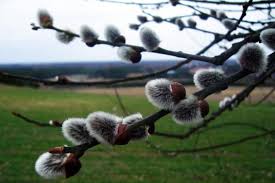
It is time to see the catkins out this month.  We may not think of trees as having flowers, but nearly all of them do.  Every catkin on a hazel tree is a cluster of flowers, each hanging from a silver-grey branch.   The Celts thought that the hazel catkin tree was magical, the source of wisdom and inspiration.

                                                                                    *

In the 17th century coffee appeared for the first time in Europe outside the Ottoman Empire and coffeehouses were established and became very popular.   The first coffeehouses are said to have appeared in 1632 in Livorno by a Jewish merchant, or in Venice in 1640.  

The first coffeehouse in England was set up in Oxford in 1650/51.  Coffeehouses were used by scholars who retired there to hear the news, and exchange ideas.  English coffeehouses in the 17th and l8th centuries were significant meeting places, particularly in London. The rich intellectual atmosphere of early London coffeehouses were available to anyone who could pay the sometimes one penny entry fee, giving them the name of 'Penny Universities'.

In Victorian England the Temperance set up coffeehouses (also known as coffee taverns) for the working classes, as a place of relaxation free of alcohol, an alternative to the pub.

                                                                                   *

The poem this week is, I am afraid, rather sad.  My sister has just been placed in a care home after having had a horrible fall leaving her with a leg injury and a head injury.  I talked to her the next day on the telephone and she was grief stricken as was I.  


Fetch Me


She had a fall
a really bad fall,
concussed herself
and got delirium
ended up in hospital,

she couldn't walk
her pelvis broken
could hardly move
couldn't stay at home,

she needed two nurses
three times a day,
there were none available
a care home was the
only answer

but she couldn't bear it
all her magic and romance
squeezed out of her,
in the ordinary if not bland
and boring room

 I telephoned.

The tears flooded
the worst week in my life
she said

Fetch me, fetch me, Trish,
she said,
I am dying here,
                       

and I wept.


                                                                              *

With very best wishes, Patricia


                                                                       *

Sunday, 23 January 2022

Viking Footsteps


 Dear Reader,


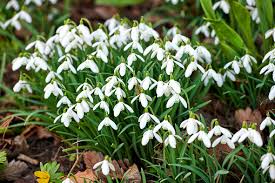
Four snowdrops came out in the garden this week but nevertheless the garden is looking a bit dreary and sad. I wish I knew more about gardens.  As I understand it, lots of people get enormous pleasure from tending their plots and seem to think about them almost as children who need feeding, caring and love. I tried last year to make a place on a small piece of lawn for wild flowers so that bees and butterflies would be pleased but unfortunately  having thrown a quantity of seeds on the grass nothing whatsoever grew there, so I feel that I haven't got green fingers.  My two daughters, Tiffany and Jessica, are very able in the garden and flowers and plants seem to do their bidding. 

                                                                                  *

I was asked this week to read out some of my poems at a June Festival in Charlbury, which is where I live.  I do feel very nervous about this and haven't yet decided to perform.  In the two years since I stood on a stage I have become very reclusive and the thought of an audience terrifies me.  Francis and I go out very little, just to the Co-op down the street, or occasionally venture out to Witney, seven miles away.  And that's it. Coronavirus has certainly changed my habits, but I am not sure whether it is for the good or the bad. Time will tell I suppose.


                                                                                 *

From Jane Austen, January 25th 1801 in Hampshire

'How do you like this cold weather?   I hope you have all been earnestly praying for it as a salutary relief from the dreadfully mild and unhealthy season preceding it, fancying yourself half putrefied from the want of it, and that you will now draw into the fire, complain that you never felt such bitterness of cold before, that you are half starved, quite frozen, and wish the mild weather back again with all your hearts.'


                                                                                 *


Viking Footsteps

There it is: a windswept empty beach,
great fields of white sand dressed
in drift wood, seaweed, plastic bottles,
flotsam, pebbles, shells, stones, and kelp skeins.
It stretches away to the horizon.

Seagulls, gannets, terns, twist and fly
make their repetitive cries, peck in the ground.
Small pools of seawater form
as the tide goes out, sea creatures swimming there.

But is that a long boat, red sails fluttering, I see?
And are those uncovered Viking footsteps in the sand?
And do I smell spitted meat, mead and honey
drifting past me on the salt-scented air?

The sand dunes hug their secrets silently,
letting the quiet southerly wind
rustle through the marram grasses.
I ask them, do Viking voices, whisper on the wind,
sometimes, on an icy night under a starlit sky?


                                                                                     *

Very best wishes, Patricia

Sunday, 16 January 2022

Blue Gingham Dress


Dear Reader,


Perhaps it was a strange choice to put on 'Blue Gingham Dress' obviously a summer poem, but I thought after the somewhat gloomy January we could cheer up thinking of our first exciting kiss in the sunshine of July, or wherever else it took place.  I have to own that I have never forgotten that evening.

Another book that I had given to me at Christmas this year was called 'English Pastoral' by James Rebanks, he who wrote "A Shepherds Life' with such acclaim last year.  Well I couldn't put it down.  I was not someone who was brought up on a farm but we did have a cottage in Norfolk where my sister and I kept ponies. This book is about farming and how it has changed, NOT for the better in the last few years.  Every page brings a revelation.  I mean when did you last see a pig in a field, or for that matter, a cow? You may not have seen these animals because they are being kept in barns all the year round.  If they are let out they make too much mess.  They are cows for goodness sake.  And then all the small fields which were once surrounded by hedges for small birds to nest in have been made enormous with vast tractors to plough with, and the hedges have been torn down. No seagulls fly after these tractors because there are no worms in the soil anymore, because of the chemicals sown to get rid of troublesome weeds, weeds that insects need to feed on.

And all the old traditions of farmers, like allowing fields to rest sometimes to regrow nutritiously, the soil to refresh, with the pace of everything changed to 'as quick as possible' there is certainly 'no time to stand and stare.'  The farmers years ago knew each other and met socially in the pub or in their homes.  Now there isn't time for this important part of a farmers life.  

Well I won't go on, if you seem interested why not buy the book yourself. Finishing it I was very moved and upset by it.  But I wouldn't have missed it for the world.


                                                                                       *

From Gilbert White, 1776, in Hampshire, January 14th

'Rugged, Siberian weather.  The narrow lanes are full of snow in places....The road-waggons are obliged to stop, and the stage-coaches are much embarassed.  I was obliged to be much abroad on this day, and scarce ever saw it fellow.'

                                                                                        *


Blue Gingham Dress

She was wearing
a blue gingham dress
long sleeved, with lace collar,
one summer evening in July.

A sweet smell of lilies
lavender bushes
roses and orange blossom
drifted on the air,

the sea sapphire
played its own repetitive tune
soft and enticing,
and a southerly wind blew.

Suddenly he took her hand
drew her near
kissed her urgently,
then came the call,

they separated
ran back to the house
her heart racing
knees weak, on fire.

The gingham dress
worn and faded now,
hangs at the back of the cupboard,
but the kiss is still as fresh
as it was on that one
summer evening in July.

                                                                                 *


With very best wishes, Patricia